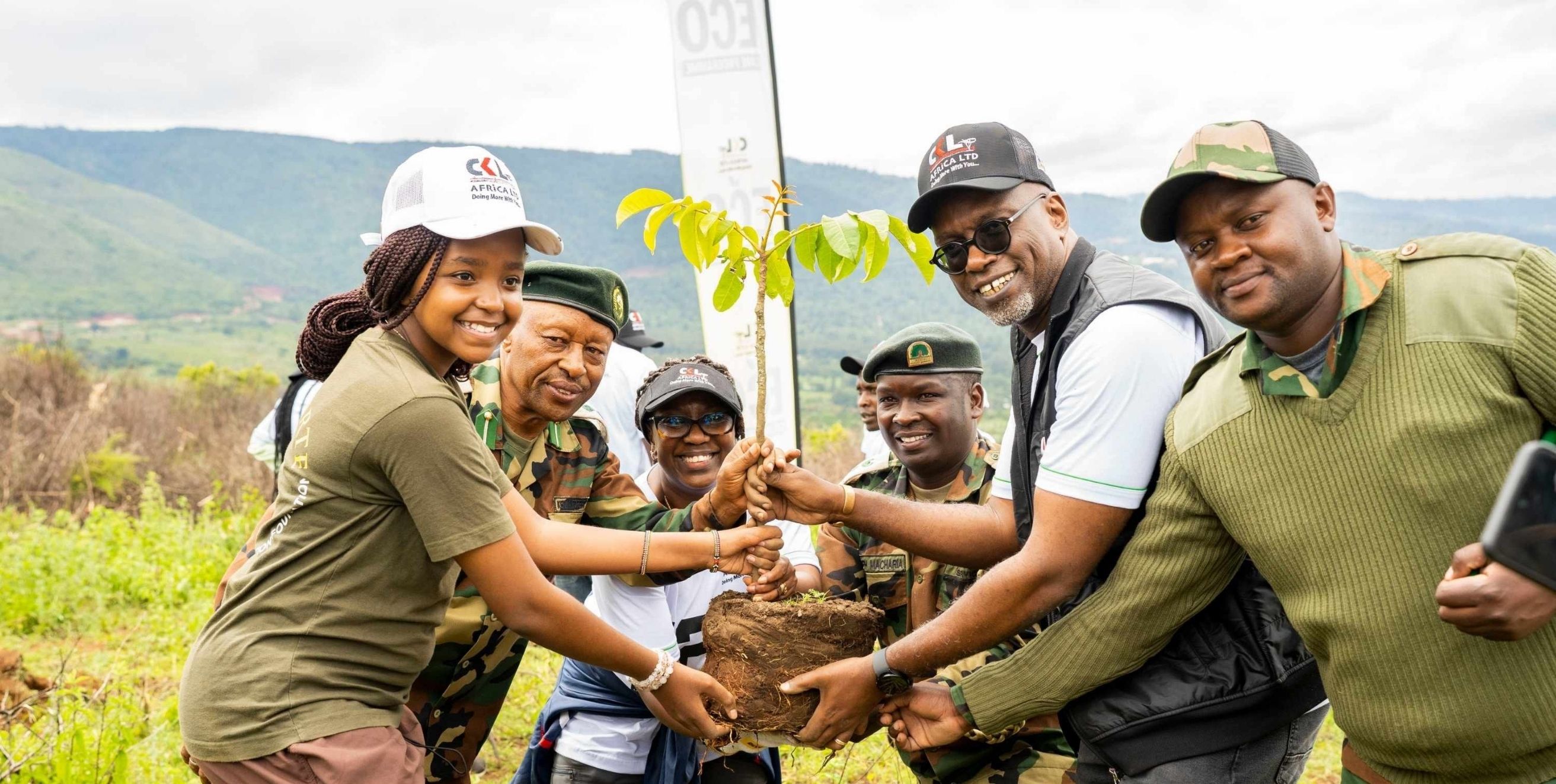
The soil at Kinale Forest was still damp from the morning's rain when the digging began. It was Earth Day, 22 April 2026, and CKL Africa employees were working shoulder to shoulder with Kenya Forest Service officers and members of the Kinale Community Forest Association, hands in the ground, seedlings passed from person to person down the line. By nightfall, 5,500 trees stood across 12 acres of what had been degraded forest land. A short drive away, 100 fruit trees, including mangoes, avocados and guavas, were also planted at Kijabe Township Comprehensive School to create the school’s first orchard.
Neither of these things happened by accident. They were the latest expression of a decision CKL Africa made 15 years ago, long before climate change became a boardroom agenda item, when the company looked at what was happening to the small farmers it worked with and decided it could not simply watch.
Where It Started
CKL Africa has been part of Kenyan life since 1906. It is the kind of longevity that comes from staying close to the ground, literally and otherwise, serving farmers and households across the country for well over a century. That closeness is exactly why, by 2010, the company could see a problem many boardrooms were still disregarding. Its own customers, small-scale farmers, were losing land to deforestation. Soil was thinning. Food security, always fragile in rural Kenya, was growing more fragile still.
There was no law requiring CKL Africa to act. No investor was demanding it. What began instead was something more ordinary and, in its way, more remarkable: employees who decided to start growing trees. No consultants, no press releases, just people who worked at the company and wanted to do something about what they were seeing. That instinct aligns with what the United Nations Global Compact asks of businesses under Principle 7, supporting a precautionary approach to environmental challenges, and Principle 8, undertaking initiatives to promote greater environmental responsibility.
What started as a handful of employees with seedlings is now a licensed nursery, a trained team, and a web of more than 123 partner institutions stretching across the country. Fifteen years in, the programme has outgrown every early expectation anyone might have had for it.
What Fifteen Years Looks Like, In Numbers
Some things are easier to feel than to count. Others need the numbers to be fully appreciated. Since 2010, CKL Africa's Eco Care Programme has raised over 2.4 million seedlings and put roughly 2 million trees into Kenyan soil. Not all of them survived, of course, nothing does at that scale, but 85% did, which means over 1.7 million trees are alive today because of a decision made a decade and a half ago. Around 1,700 hectares of land have been restored in the process.
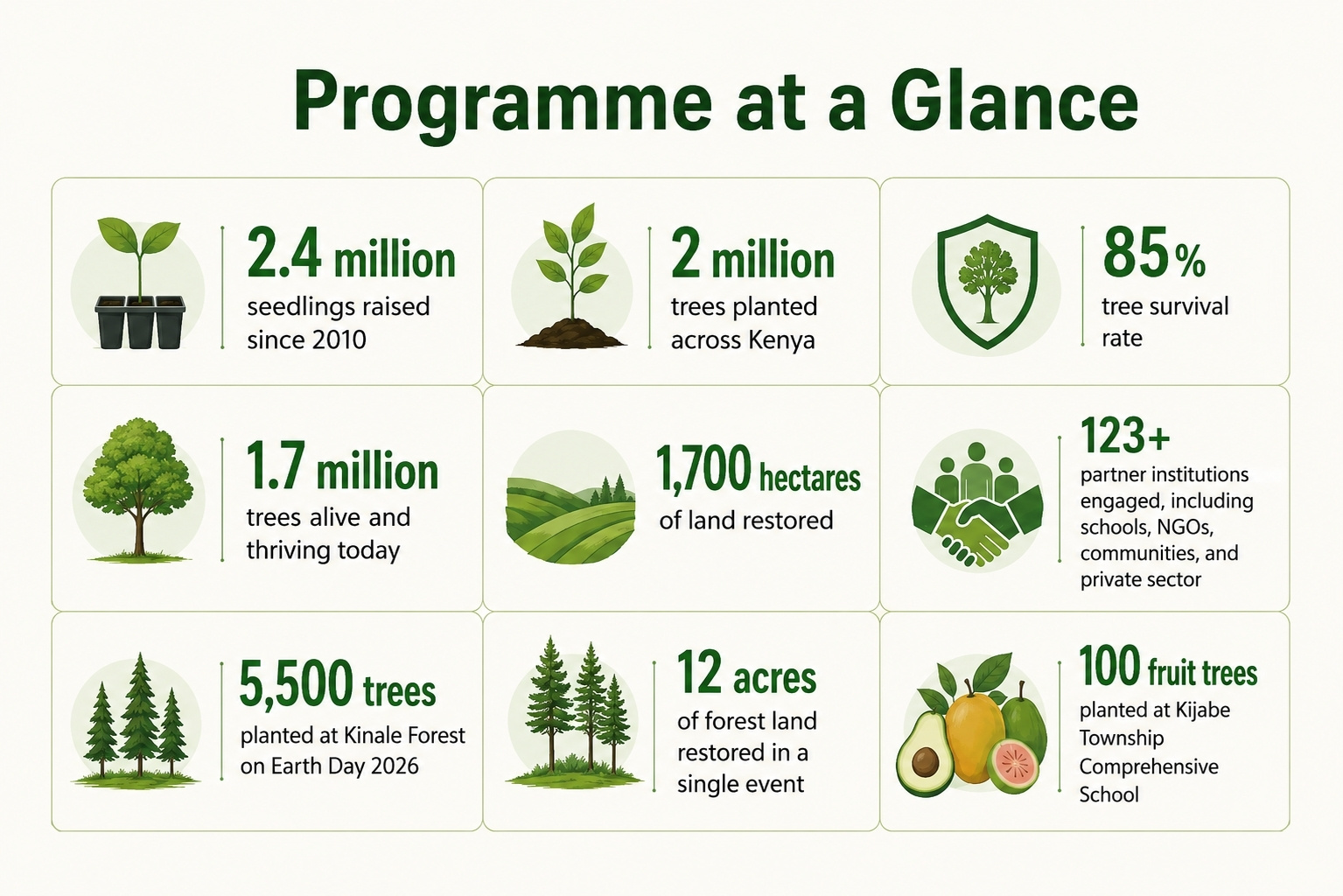
This is what SDG 15, Life on Land, looks like when it stops being a target on a document and becomes hectares of restored ground and Kenya's own goal of 15 billion trees by 2032 inching closer. It is also, climate resilience being built one planting season at a time in the communities around each site, which is what SDG 13, Climate Action, asks of everyone who has the means to act.
From Restoring Forests to Growing Food
The Earth Day 2026 event was never going to be an ordinary planting day. It landed in the same year as CKL Africa's 120th anniversary, and the company chose its ground carefully. Kinale Forest, at Old Kijabe, is not a showcase site. It is a working forest that has taken real damage from deforestation over the years, managed jointly by the Kenya Forest Service and the Kinale Community Forest Association. The 5,500 trees planted there were never meant to be photographed and forgotten. They were meant to stay.
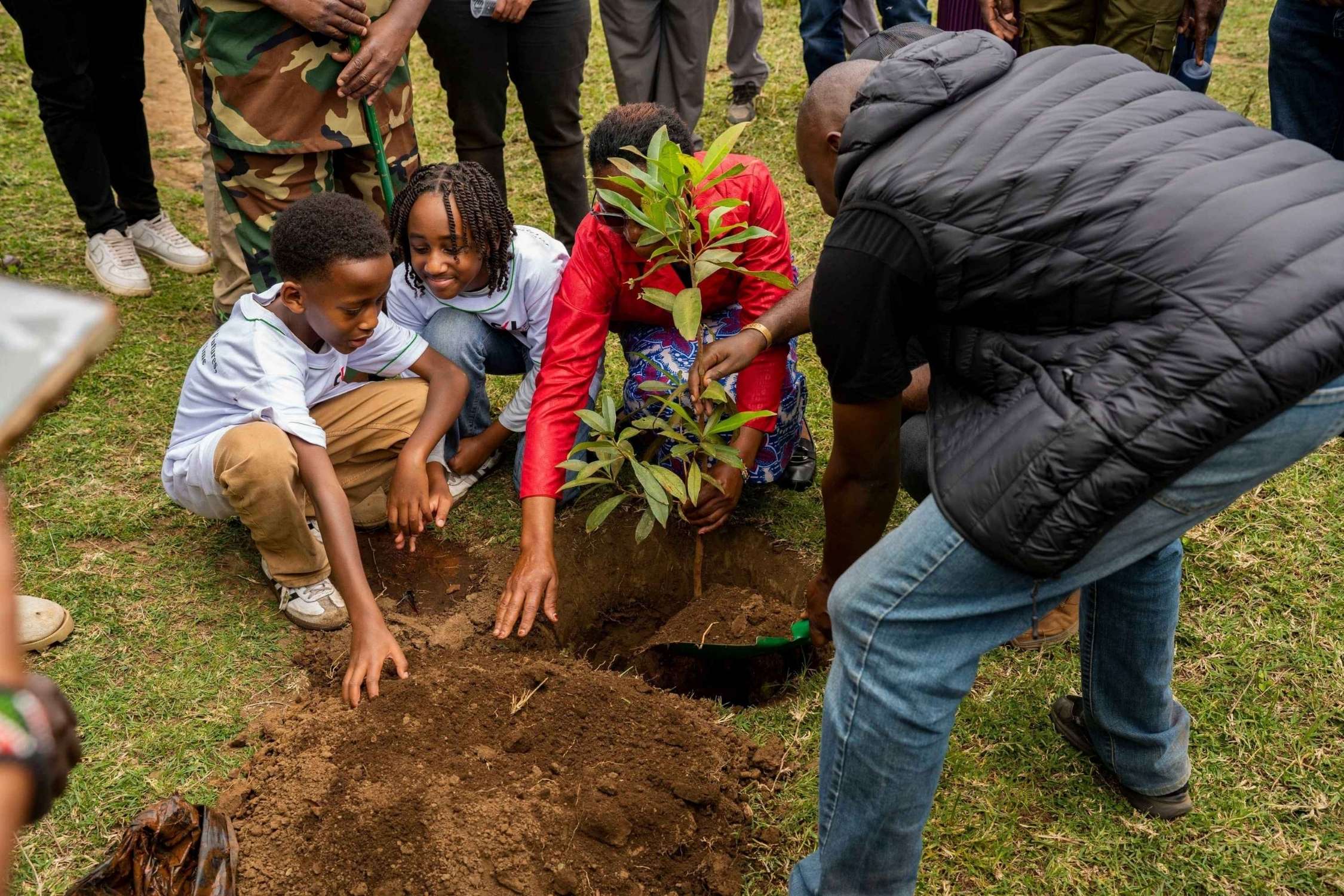
But it is the second half of that day's work that says the most about where this programme is heading. At Kijabe Township Comprehensive School, in partnership with the Karen Forte Foundation, 100 fruit trees went into the ground; mangoes, avocados, guavas, chosen because they would feed children for years. For years, the programme has been about trees. On that one day, it became about something you can eat. It is a small shift in language but a much bigger shift in intention.
That shift is SDG 2, Zero Hunger, showing up in the most practical way possible. Fresh fruit is not something every child in rural or peri-urban Kenya can count on. An orchard planted once and left to grow changes that permanently, without needing anyone to write another cheque.
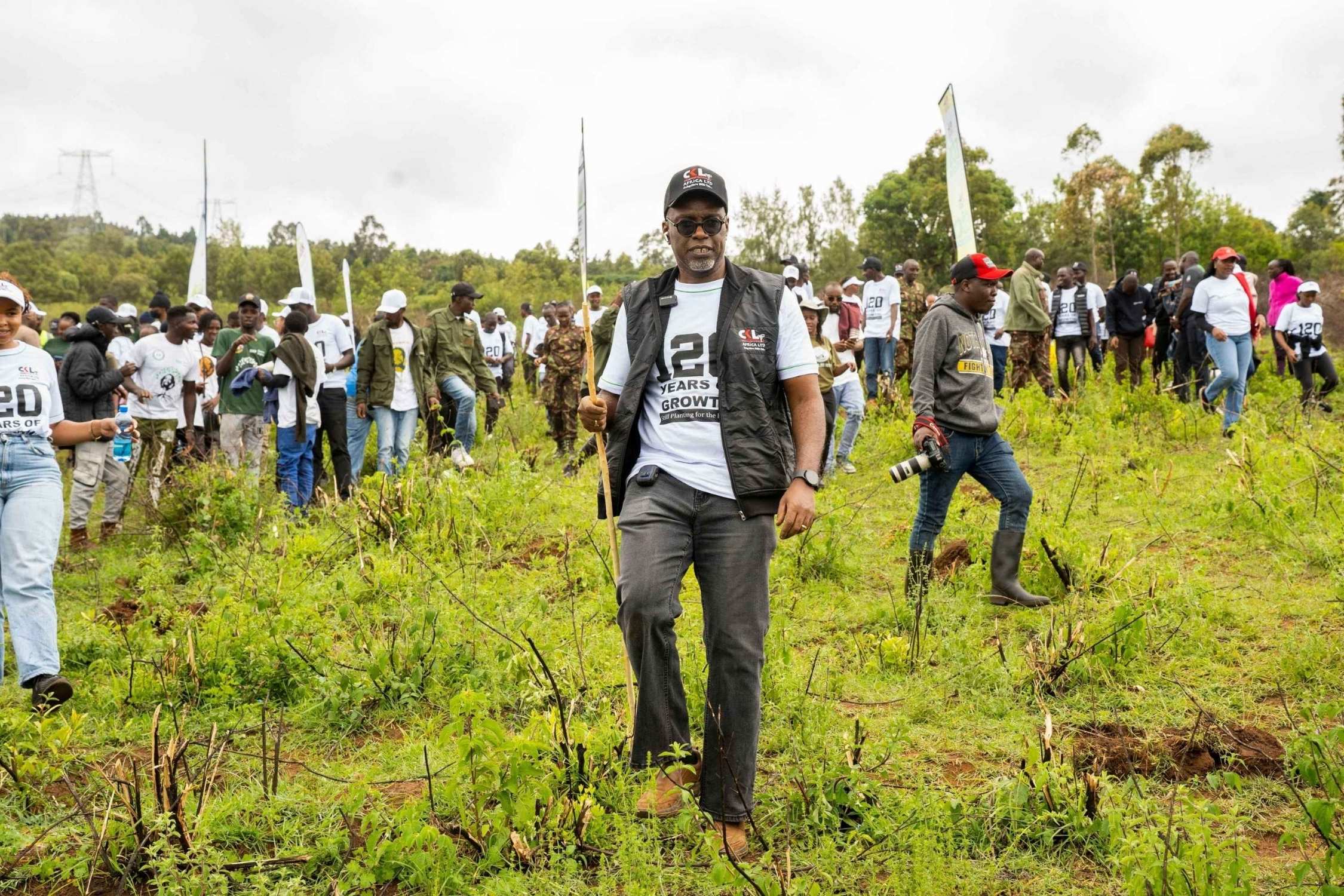
“Stewardship has always been at the heart of CKL Africa. For 120 years, this company has been part of the communities it serves, and the Eco Care Programme is the most living expression of that commitment. We started by planting trees. Today, we are planting orchards in schools, restoring forests in partnership with our communities, and contributing to a national vision for a greener Kenya. We are proud of this milestone, and even more committed to what comes next.”
Mucai Kunyiha, Group CEO, CKL Africa Ltd
Who Actually Gets Something Out of This
It would be easy to talk about this programme only in terms of trees and hectares. But the people matter more, and there are a lot of them. The pupils at Kijabe Township Comprehensive School will grow up with mangoes and avocados they did not have before, which sounds small until you consider what that means for a child's nutrition over years. Families around Kinale Forest were paid to prepare the land and dig the pits before planting even began, so the benefit were not only environmental; it reached people's pockets and livelihoods.
Further out, small-scale farmers across the country have drawn on the programme's other arms, including the Feed Africa Challenge Initiative, for seedlings and for the kind of climate-smart know-how that keeps a farm producing through a bad season. The partner institutions in the network, schools, NGOs, government agencies, private companies, have each taken something away too: seedlings, training, or simply a working template for how to run a programme like this well. And inside CKL Africa, something has held for years that many corporate initiatives never manage: the people who work there now and in the past still show up for it, year after year, because it feels like theirs.
That kind of layered partnership, government agency, community forest association, foundation, over a hundred institutions, is what SDG 17, Partnerships for the Goals, actually looks like on the ground.
Why Longevity Matters More Than One Good Day
According to the Sustainable Development Goals Report 2026, only 15% of assessable SDG targets are on track, while a further 21% are making moderate progress. Those numbers should worry anyone paying attention. Against it, a programme that has planted 2 million trees, kept 85% of them alive, and restored 1,700 hectares of land is not just a nice story. It is proof that this is possible when a company commits to something and simply keeps going, year after year, past the point where most initiatives silently fade out.
What is harder to capture in numbers is how much the programme has changed shape without losing its footing. It began as a handful of employees planting trees on weekends. It became a licensed operation with a professional network spanning government, civil society, and business. And this year, it took the biggest step yet, from growing forests to growing food, from a school being greener to a school being fed.
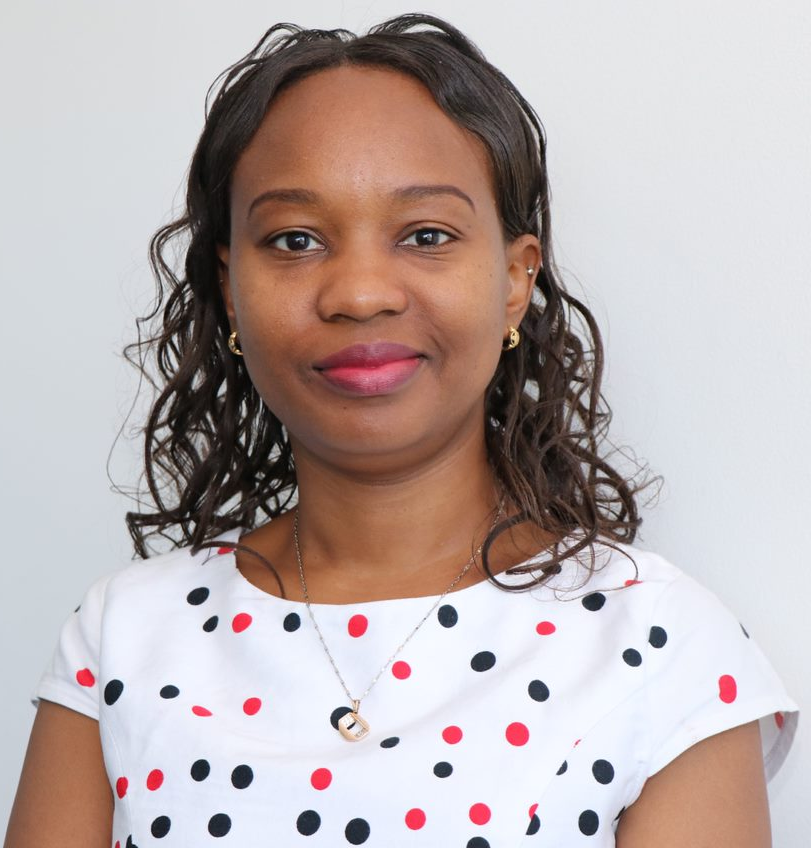
“The CKL Eco Care Programme is a compelling example of what responsible business looks like when it is rooted in genuine commitment and sustained over time. CKL Africa has demonstrated that private sector action on climate and food security does not have to wait for regulation or external pressure. It can start with a decision, grow through partnerships, and deliver results that are measurable, lasting, and deeply connected to the communities a company serves. This is the kind of leadership that the Global Compact Network Kenya is proud to support and champion.”
Judy Njino, Executive Director, UN Global Compact Network Kenya
Growing Forward
Trees take their own time. The seedlings planted at Kinale Forest this April will not look like much for years yet, and the fruit trees at Kijabe Township Comprehensive School will need seasons before they carry their first proper harvest. That slowness is not a flaw in this story; it is the whole point. Real impact rarely arrives quickly. It asks an organization to keep showing up long after the applause from the launch event has died down.
CKL Africa has marked 120 years. The Eco Care Programme, somehow, is still finding new directions to grow in. The question worth sitting with is not really about CKL Africa at all. It is this: if one company's commitment to planting trees eventually grew into restored forests, fed schoolchildren, and a network of 123+ partners across the country, what could fifteen years of steady commitment grow into somewhere else?
The inclusion of company names and/or examples is intended strictly for learning and communications purposes and does not constitute an endorsement of the individual companies by the UN Global Compact.